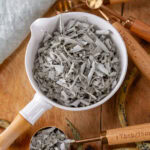
How to dry sage
Drying sage prolongs its shelf life, since dry herbs are less susceptible to spoilage. Sage is a versatile ingredient that’s great in tea, pairs well with meat and poultry, stuffing, squash, and creamy pasta dishes. And it makes the house smell amazing!
Servings 1 varies
Calories 19kcal
Ingredients
- Fresh sage lots of it
Instructions
Prep the Sage
- Rinse sage gently with fresh tap water. Remove any dirt, damaged leaves, and stems. Spin dry in a salad spinner, or pat dry with a clean towel.
Dehydrator method (best method)
- Arrange sage leaves in a single layer on dehydrator trays. Do not overlap. Use mesh tray liners to prevent dry, light, smaller leaves from falling through the trays. Set dehydrator to 100°F (or “herb” setting). Dry for 2–4 hours, until leaves are brittle and crumble easily.
Oven method (quick method)
- Preheat oven to the lowest setting (around 170°F). Line a baking sheet with parchment paper. Spread sage leaves in a single layer.
- Prop the oven door open about 6 inches, to allow moisture to escape and dry for 1–3 hours, checking every 15 minutes. Sage can burn very quickly, so keep an eye on it. The leaves are fully dry when they feel brittle and crumble easily.
Air-Drying Method
- Gather sage into small bundles and secure with a rubber band. Tie with kitchen twine and hang upside down in a warm, dry, dark, well-ventilated area for 7-14 days. You can also hang the bundles inside a brown paper bag with holes for faster, cleaner drying.
Notes
This recipe works with white sage as well as regular sage
Store dried sage in airtight jars, like Mason jars with tight fitting lids, or in vacuum-sealed bags in a cool, dark place, away from direct sunlight. This will keep the herbs from oxidizing and losing their flavor. Stored properly, dried sage should keep for up to one year.
yield: Varies (based on amount of fresh sage)
Nutrition
Calories: 19kcal | Carbohydrates: 2g | Protein: 1g | Fat: 1g | Saturated Fat: 0.4g | Polyunsaturated Fat: 0.1g | Monounsaturated Fat: 0.1g | Sodium: 1mg | Potassium: 55mg | Fiber: 1g | Calcium: 85mg | Iron: 1mg
