
This post may contain affiliate links. If you make a purchase through links on our site, we may earn a commission.
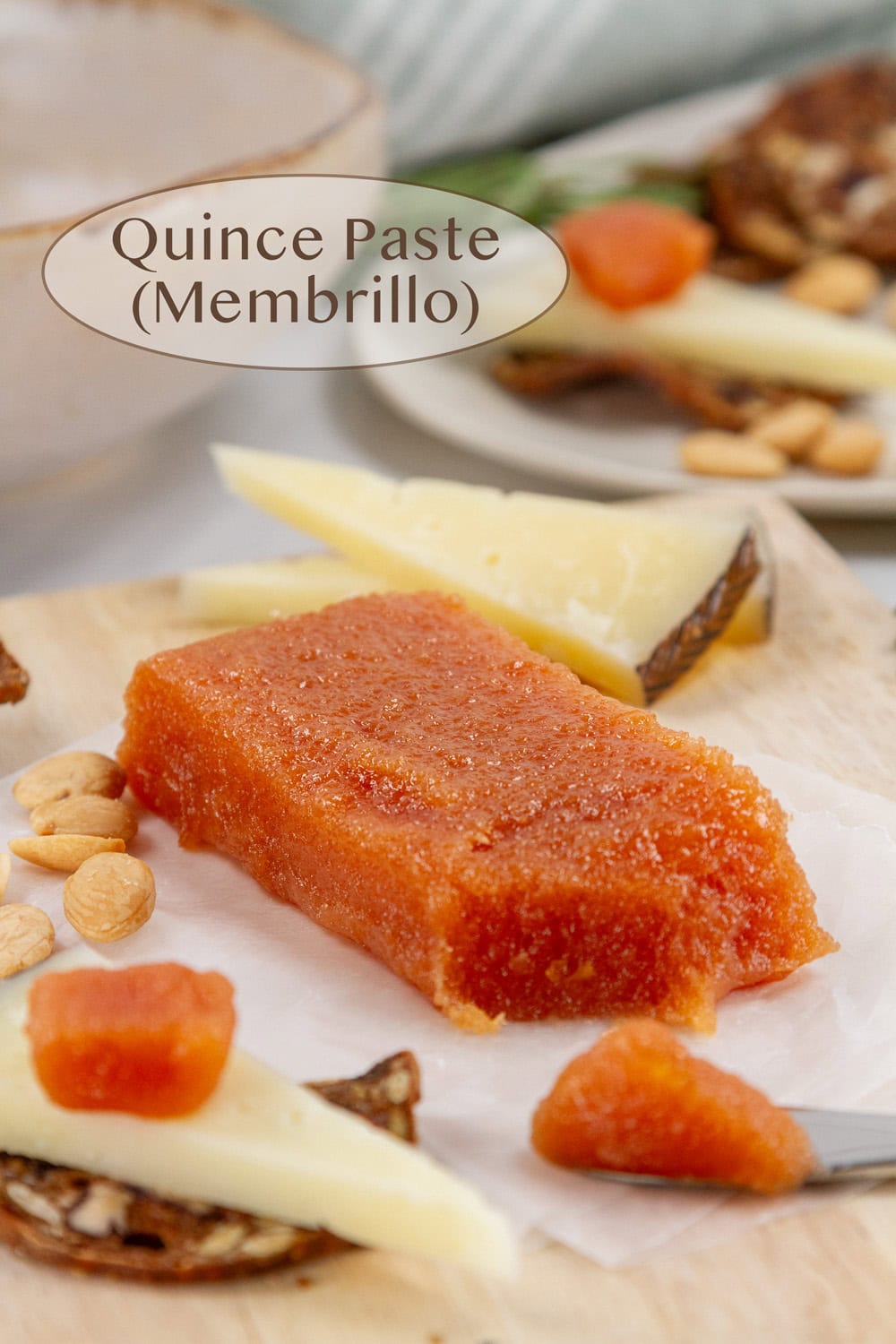
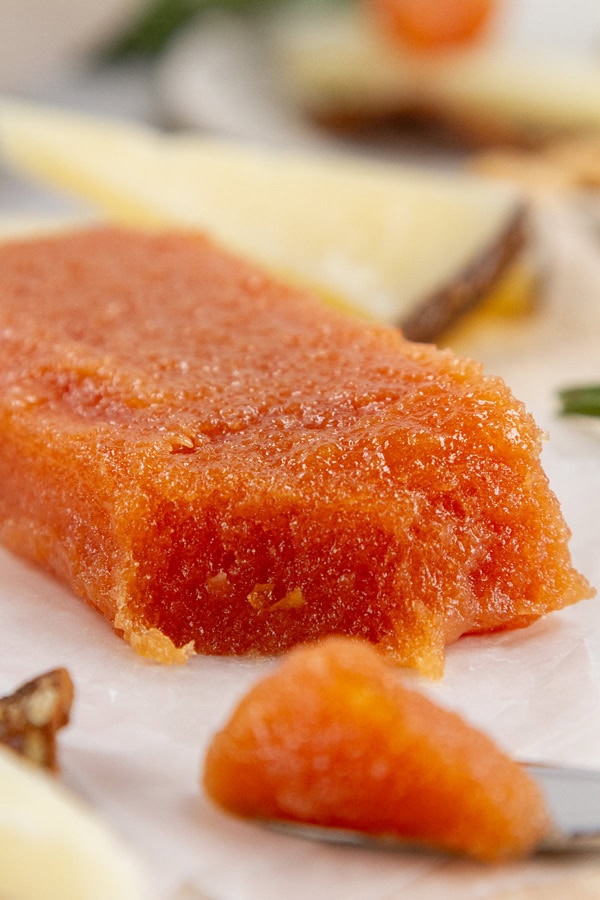
Quince Paste (Membrillo) is a thick, sweet fruit preserve made from quince. It’s a golden-yellow fruit that looks like a mix between an apple and a pear the fuzz of a peach. This classic Spanish treat has a rich amber color, floral aroma, and sweet-tart flavor that pairs beautifully with cheese, especially Manchego.
It’s easy to make at home with just a few simple ingredients and keeps well for months, making it perfect for gifting or adding to your holiday charcuterie boards and cheese plates as appetizers. Naturally gluten-free and beautifully fragrant, quince paste is a traditional recipe that turns an old-fashioned fruit into something truly special.
You’ve got to try this one. It’s one of those recipes that feels a little magical. When you cook the quinces, they start out pale and firm, but as they simmer, they turn the most gorgeous deep rosy-gold color and fill your kitchen with the warm scent of fall. The result is this luscious, sliceable jelly that’s amazing with cheese, crackers (like my Super Seed Cheese Crackers), or even spread on toast. It’s the kind of thing that makes you feel like you’ve been cooking from a cozy Spanish kitchen all afternoon.
We appreciate your support
Please let me know if you have any questions about this recipe. I read all the comments myself and I try to help as soon as I can. I have readers from all levels of comfort and experience in the kitchen on my site, and I’ve tried to answer some of your questions already in the post. But if I’ve missed anything, please feel free to leave a comment and ask.
What is quince?
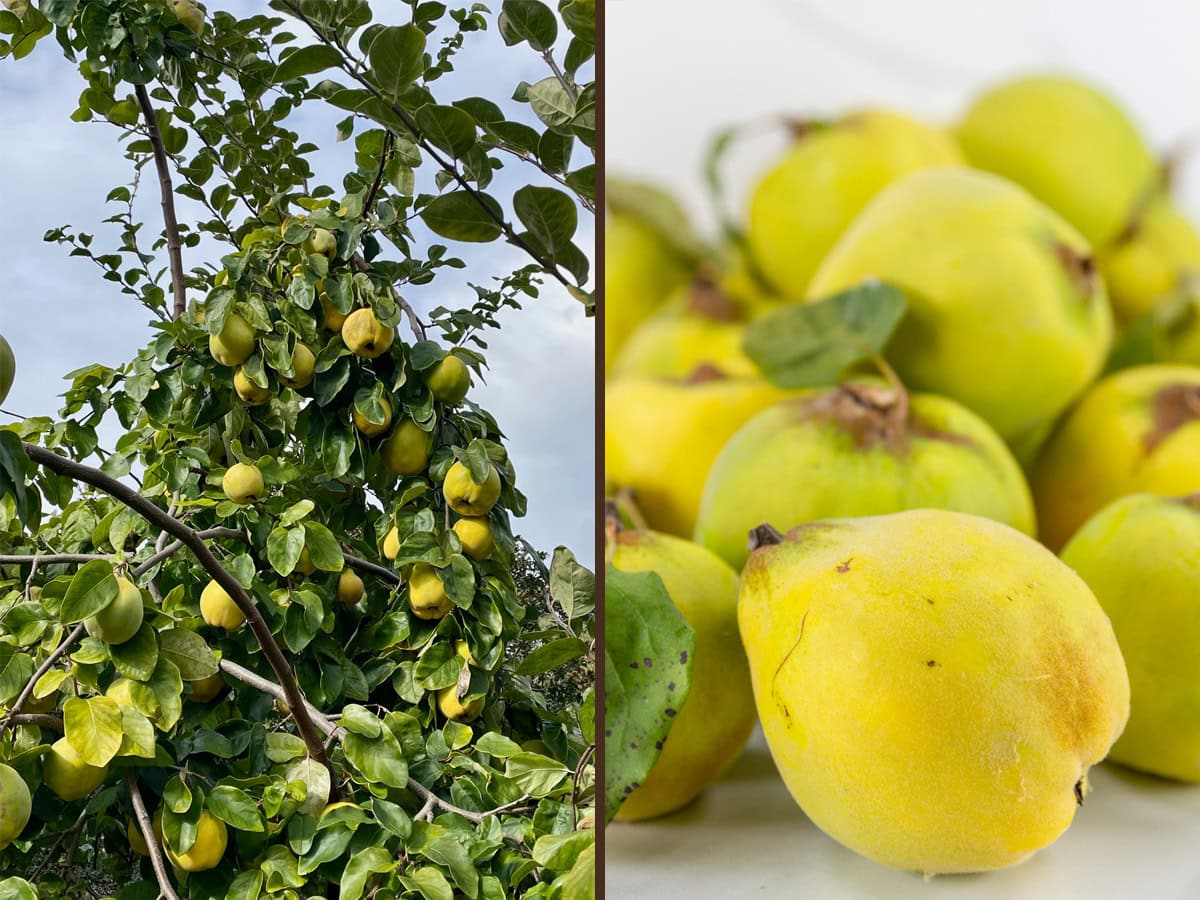
If you’ve never heard of a quince before, don’t worry — you’re not alone! I offered some to a couple friends and they asked me this same question!
Quinces are an ancient fruit, related to apples and pears, but they’re really tart and fibrous, and they aren’t enjoyable eaten raw.
Once cooked, though, they completely transform, becoming tender and sweet. They’ve been used for centuries in Mediterranean and Middle Eastern kitchens for jams, compotes, and of course, membrillo. You might spot them at the farmers market in fall, usually tucked between the apples and pears. If you see them, grab a few — they’re worth it!
Quince is rich in antioxidants, including vitamin C, flavonoids, and phenolic acids. It’s a good source of soluble fiber, which promotes digestion. And, it also contains pectin, a prebiotic that nourishes beneficial gut bacteria.
Mine came from a neighbor, and she gave me a whole bucket full! I had fun looking at the tree while she cut the fruit off and handed it to me. Depending on how my kitchen remodel goes, I’m hoping to make a quince ginger cake with the leftover fruits. And my neighbor told me that the fruit will last about 3 months just sitting on the counter, so that’s great.
Quince are typically ripe in the fall, often from September to November, depending on the variety and climate. Key indicators of ripeness are a golden yellow color and a strong sweet fragrance.
I’ve purchased Dulce de membrillo, quince paste before from the grocery store, but never had the chance to make it. So, I was excited to try making it at home. I also made a beautiful Ginger Quince Cake from the fruit I was given. Be sure to check that out too.
It’s very high in natural pectin, so the ingredients are super simple.
How to make
The detailed instructions with ingredient amounts are in the recipe card below. I offer tips and tricks in the post for you.
The process for making the quince paste is actually quite easy, with very few steps, but it does take a long time. So, give yourself a day to make this – maybe on a nice rainy fall day.
You’ll want about 4 pounds of quince. That’s 4 pounds before you start cleaning the fruit. And, don’t worry if you have a little more or a little less. It’ll all get taken into account later in the process. I started this batch with 9 medium sized fruits.
Clean the fruit by washing it and rubbing it a bit to get some of the peach fuzz off of it. Then peel it. If you have one of those cool apple peelers they work great here. And an electric one would be even cooler. Or, peel them with a veggie peeler or a sharp knife. Then, chop off pieces, these don’t have to be nice neat cubes or anything either. Just a rough chop. And as you chop, drop the pieces into the water in the pot.
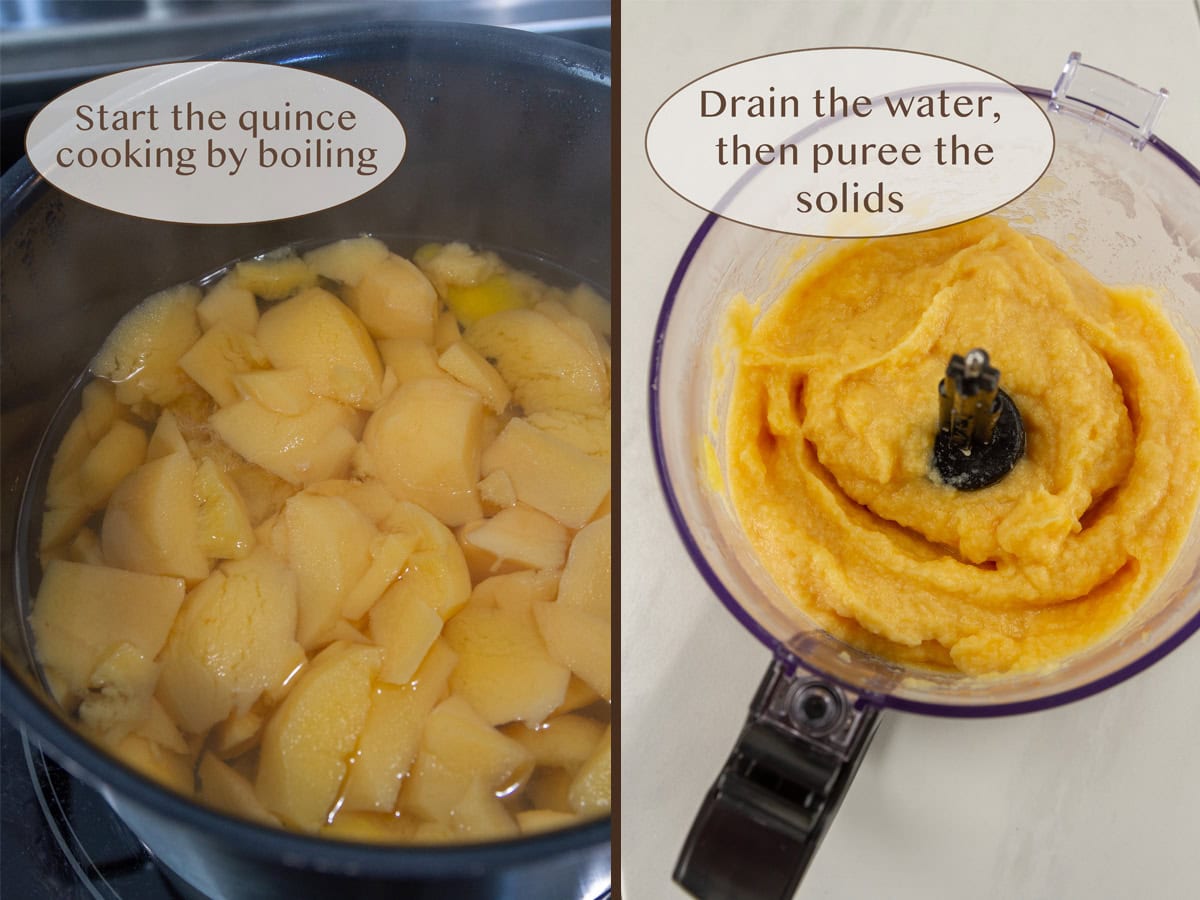
Pre-cook the quince by boiling it briefly with some lemon zest to soften it. Then strain it from the water and puree it in a food processor, high powered blender, or by using a food mill.
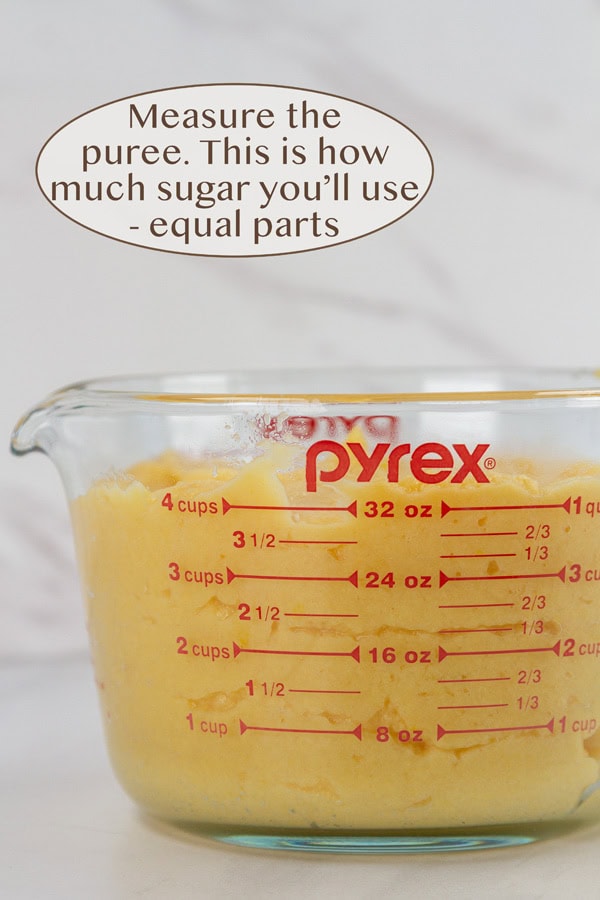
Next, you’ll measure the amount of puree that you have and you’ll use equal parts quince puree and sugar to make the paste. So, if you have 4 cups of puree, you’ll need 4 cups of sugar. I had four cups of puree in my batch here. Yes, I know it’s a lot of sugar, but that’s what makes the membrillo set up properly, and the sugar helps balance out the tartness. I even saw several recipes that use more sugar than fruit, so this amount is still lower than those.
Yes, you can use less sugar, you’ll get more of a jam than a solid paste. But it’ll still be delicious.
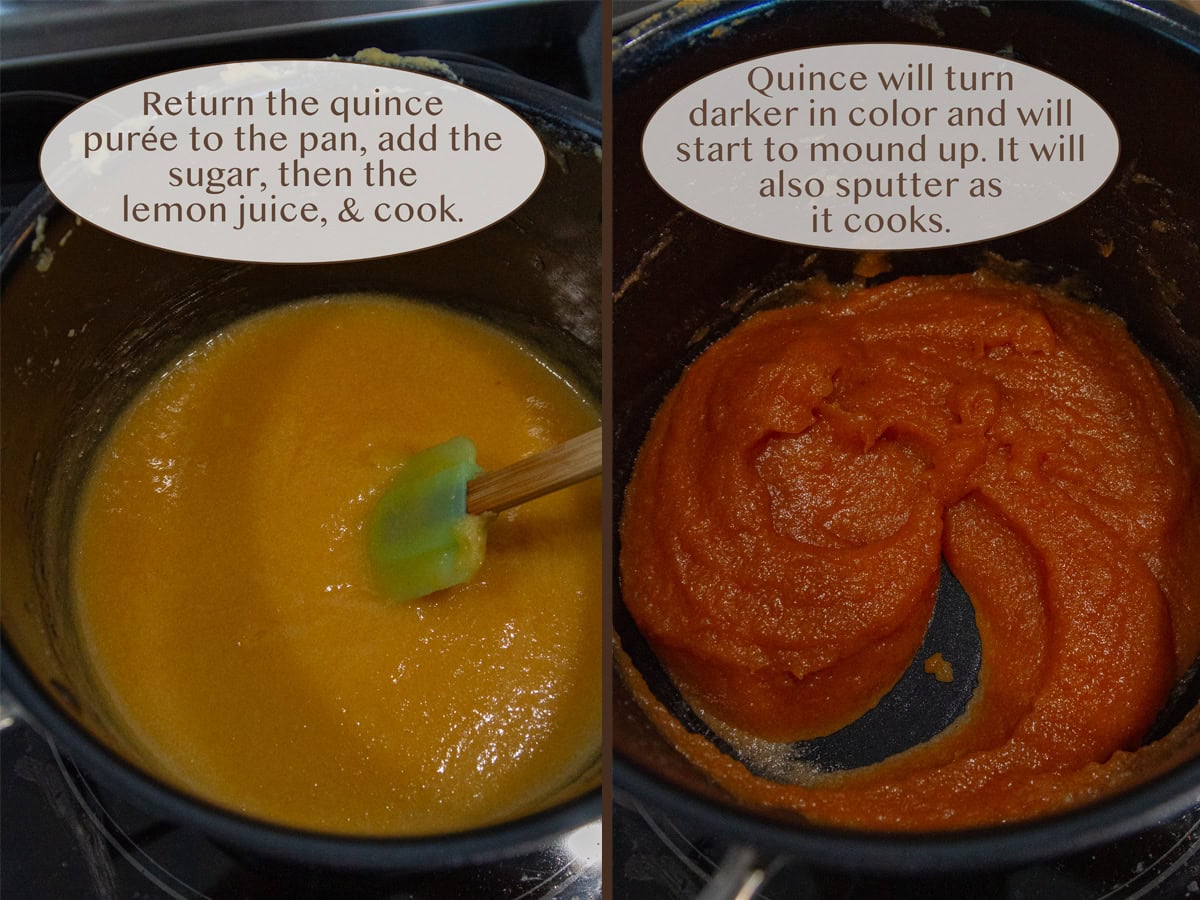
Return the quince puree to the now empty large pan, and cook again, adding the sugar and the lemon juice. Here’s where you’ll cook it for a really long time. The longer you cook it, the thicker it will get and the deeper pink-orange it becomes.
Stir it more towards the end of cooking where it’ll sputter and mound up, and it will have turned a lovely pink ruby color. Give it a taste before taking it off the heat. It should taste more complex than applesauce. If it tastes like applesauce, it needs to cook longer.
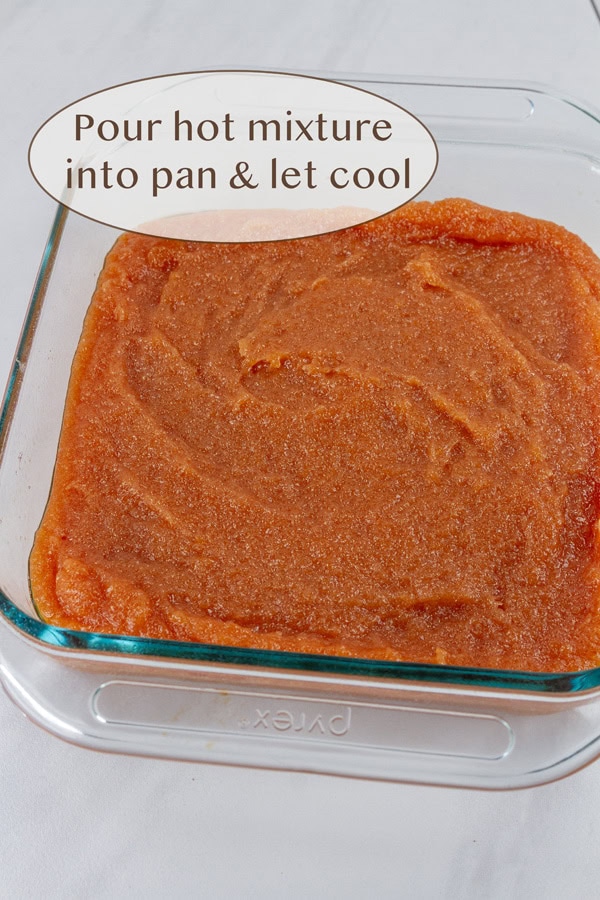
And finally, pour it in a pan and let set. The color and flavor deepen a little is at cools down.
Pro tip: Every batch of quince paste will be a little different. This is because the pectin content and ripeness of the fruit will vary every time.
Let’s keep in touch
If you like seeing my recipes subscribe via email in the upper right.
Or, connect with me on your favorite social media channel for recipes, photos, & much more:
Pinterest, Facebook, Instagram, YouTube and Twitter!
And find my shop on Amazon for recommendations on cool tools
If you try this recipe,
please come back & leave a comment below letting us know how it goes.
Share a picture & tag @lifecurrents on Instagram.
Or you can upload a “tried it” photo (I would love to see)
via the pin.
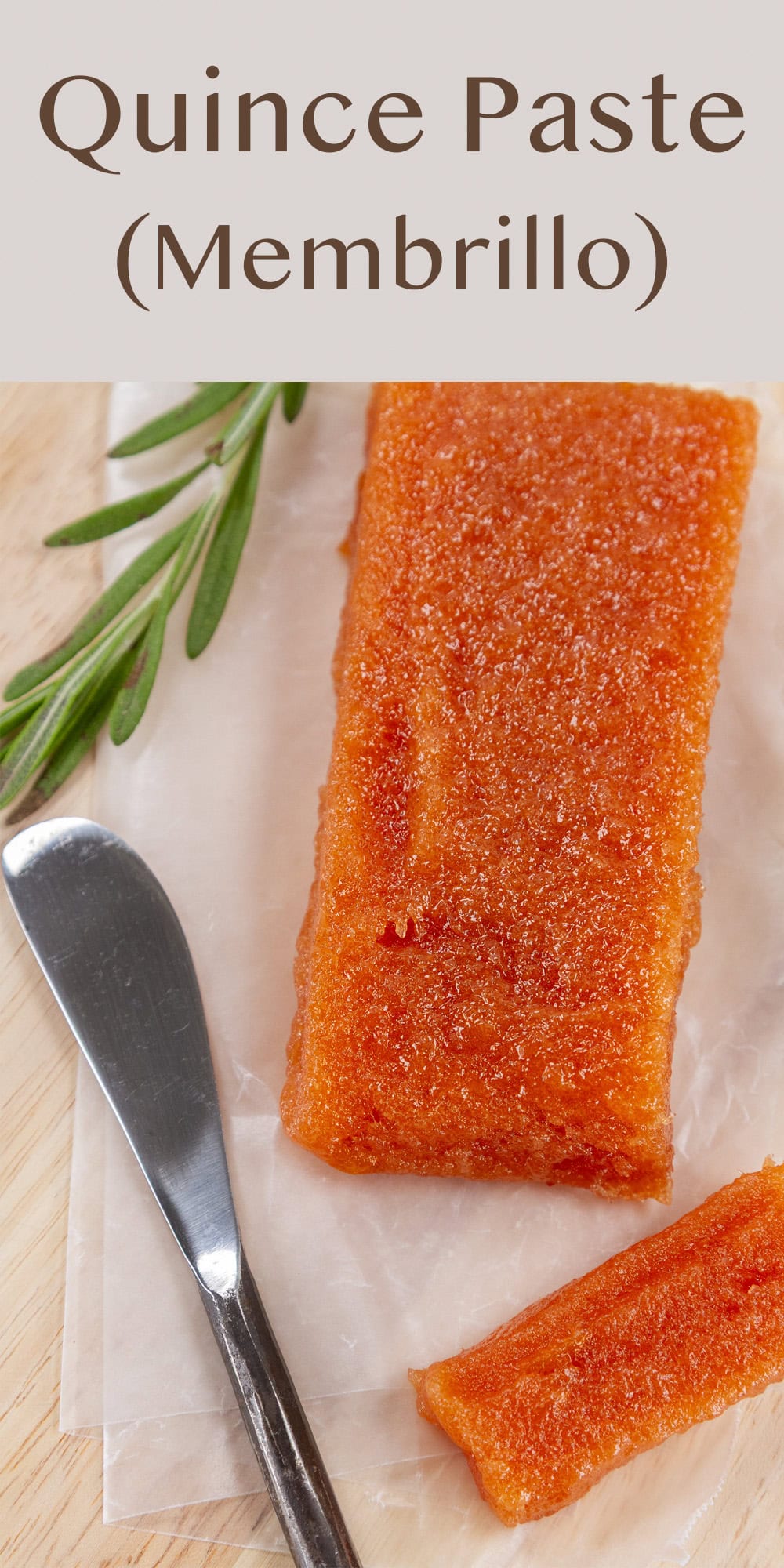
Recipe for How to Make Membrillo
Quince Paste (Membrillo)
Equipment
- Large pot
- scale
- 8×8 pan
Ingredients
- 4 pounds quince washed, peeled, cored, roughly chopped – you start with four pounds of whole quince, then prep them
- Zest of a lemon and juice of the lemon
- 4 cups granulated sugar exact amount will be determined during cooking
Instructions
- Place quince pieces in a large saucepan (6-8 quarts) and cover with water. Add the lemon zest and bring to a boil. Reduce to a simmer, cover, and let cook until the quince pieces are fork tender, about 30-40 minutes.
- Strain the water from the quince pieces. Puree the quince pieces and the lemon zest in a food processor, blender, or by using a food mill.
- Measure the quince puree. Whatever amount of quince puree you have, that's how much sugar you will need. So, if you have 4 cups of puree, you'll need 4 cups of sugar.
- Return the quince puree to the now empty large pan. Heat to medium-low. Add the sugar. Stir until the sugar has completely dissolved. Add the lemon juice.
- Continue to cook over a low heat, stirring occasionally (you’ll stir more towards the end of cooking), for 1 & ½ hours to 2 & ½ hours, until the quince paste is very thick and has a deep orange pink color. The mixture will sputter and mound up towards the end of cooking.
- Grease an 8×8-inch square glass baking dish. Pour the hot mixture into the greased baking dish and smooth the top. Let it cool to room temperature, then cover with plastic wrap and refrigerate until firm, about for 24 hours. Invert the quince paste onto a serving platter, use an offset spatula or a knife to gently pry it out with a knife.
Notes
Nutrition
Nutritional information is based on third-party calculations, and should be considered estimates. Actual nutritional content will vary based on brands used, measuring methods, portion sizes, and more.


Debi
Fantastically easy to make (it just takes a bit of time), and so good on a cheese plate! I also think I’ll be making some for Christmas gits. I just know you’ll love it as much as I do. Debi, author, Life Currents